
Why Are Your Meta Ads Not Working? One Common Reason: The Wrong Objective
Most Meta ads don't fail because of bad luck. They fail because the campaign objective doesn't match the business goal. Here's how to fix it.
Part 1 of my series, "Why Meta Ads Fail." Before you blame your budget, your creative, or the algorithm, start here. This is the mistake I see most, and it's the cheapest one to fix.
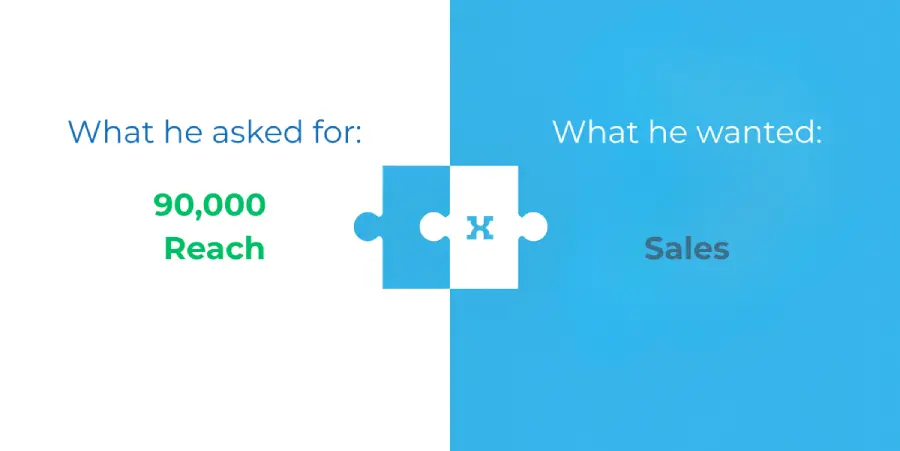
A client called me once, genuinely excited. His campaign had reached over 90,000 people in a week. The numbers looked huge. Then came the real question, the one that always comes: "So Bashar… why hasn't anyone bought anything?"
I already knew the answer before I opened his account. He'd asked Meta for reach. And Meta, being very good at its job, gave him exactly that — 90,000 sets of eyeballs and zero sales. He didn't have a bad campaign. He had a campaign that was succeeding at the wrong thing.
This is the trap almost nobody talks about. Most Meta ads don't fail because they're "bad." They fail because the objective you chose doesn't match the outcome you actually wanted. You order soup and get angry that it isn't a steak, when the menu clearly said soup.
Let me show you exactly how this happens, and how to never let it happen to you again.
Meta gives you what you ask for, not what you want
Here's the single most important thing to understand about advertising on Facebook and Instagram:
The campaign objective is your instruction to the algorithm.
When you pick an objective, you're not choosing a label. You're telling Meta's system who to show your ad to and what to optimize for. Meta then hunts for the people most likely to do that specific action, and only that action.
Choose "Awareness," and Meta finds people likely to remember your brand. Choose "Engagement," and it finds people likely to like and comment. Choose "Sales," and it goes looking for people likely to pull out a credit card.
So if you select Traffic but you're dreaming of purchases, the algorithm isn't broken when the sales don't come. It did its job perfectly. You just gave it the wrong job.
Read that again, because it's the whole game: a wrong objective doesn't underperform, it over-performs at something useless to you.
The funnel: where your objective is supposed to live
Every customer goes on a journey before they buy. They don't see your ad once and immediately hand over money, especially if they've never heard of you. That journey has three stages, and each stage has its own matching objective.
This is the part most people skip, and it's why their ads fail.
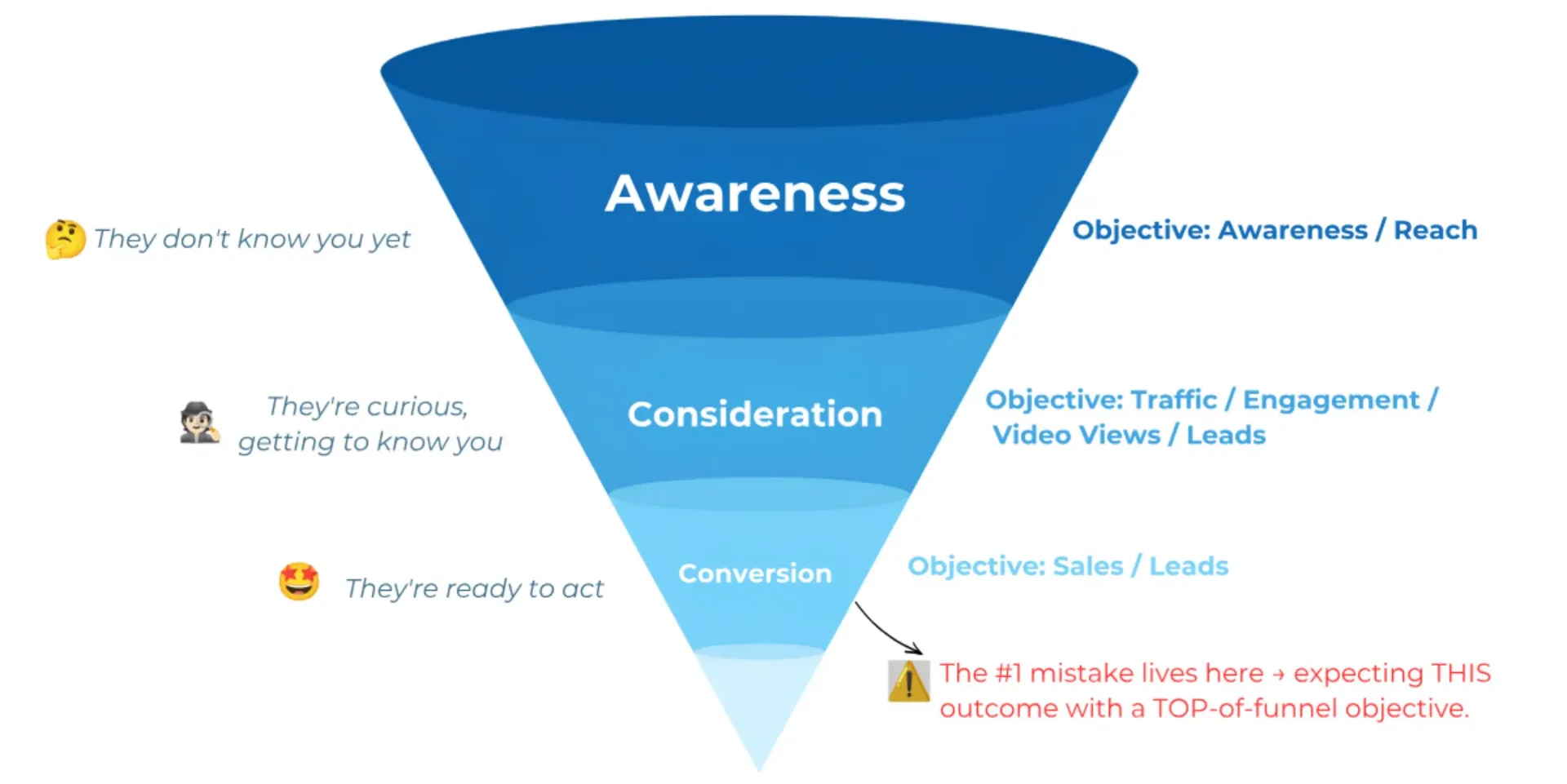
Top of the funnel — Awareness. These people have never heard of you. Your job isn't to sell; it's to introduce yourself. Asking a total stranger to buy is like proposing marriage on a first date.
Middle of the funnel — Consideration. Now they know you exist. They're curious. Here you earn trust, get them to your site, watch your video, read your offer.
Bottom of the funnel — Conversion. These people are warm. They know you, they're interested, and they're ready. This is where "Sales" objectives belong, and where they actually work.
The mistake? Running a top-of-funnel objective while expecting a bottom-of-funnel result. Showing a "buy now" expectation to people who met you ten seconds ago. It's not impatience, it's a mismatch between where your customer is and what you're asking of them.
Right objective, right time (this is the part people miss)
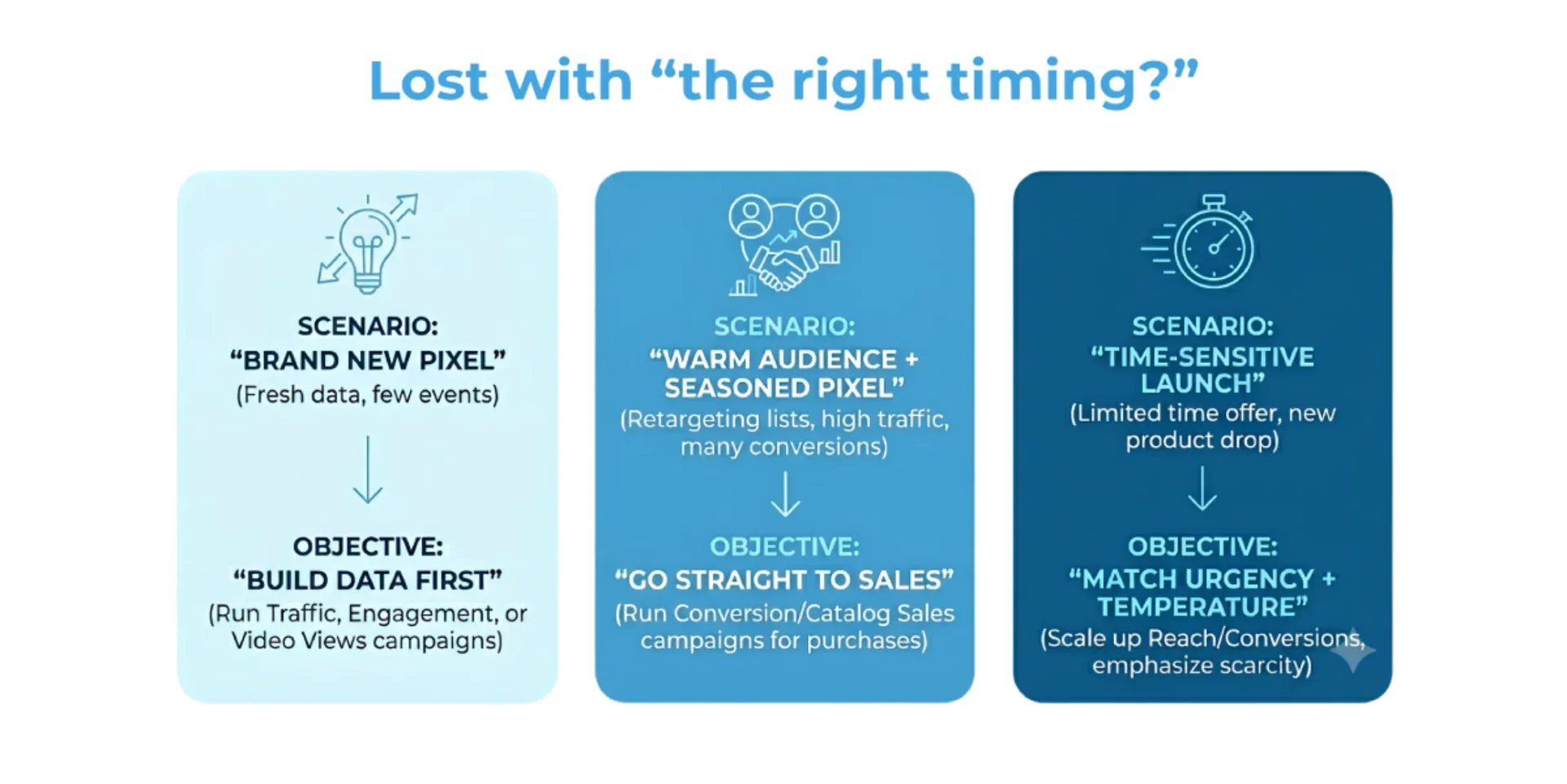
Choosing the right objective isn't just about the funnel stage. It's about timing, and the timing depends on your situation.
If your business or pixel is brand new, you may not have enough conversion data for Meta to optimize sales well yet. Jumping straight to a Sales objective can starve the algorithm of the signals it needs. Sometimes you build momentum first with engagement or traffic, then graduate to sales once there's data to learn from.
If you're established with a warm audience and a seasoned pixel, going straight for Sales is exactly right, and using Awareness would be leaving money on the table.
If you're launching something time-sensitive (a sale, an event, Eid, Mother's Day), your objective should match the urgency and the temperature of the audience you're targeting — warm buyers get conversion campaigns; cold crowds may need a faster-burning consideration push first.
Same business. Same product. Different moment. Different right answer.
Set the right expectations (and the right next action)
Here's a habit that will instantly make you a smarter advertiser: before you launch, decide what success looks like for that specific objective, and decide what happens next.
Every objective produces a different "win" and points to a different next step. Judge each one by its own scoreboard, not someone else's.
| Objective | What it's for | What to expect | Your next move |
|---|---|---|---|
| Awareness / Reach | Getting in front of new people | Low cost per 1,000 people; brand recall, not sales | Retarget these viewers with a consideration ad |
| Traffic | Getting people onto your site | Clicks and visits, not guaranteed purchases | Retarget visitors who didn't convert |
| Engagement | Sparking interaction & social proof | Likes, comments, messages, video views | Move engagers toward your offer |
| Leads | Collecting contact info | Form fills / messages at a sensible cost | Follow up fast, nurture to a sale |
| Sales | Driving purchases | Actual conversions and ROAS | Scale what works, refresh creative |
When you ran "Awareness" and got cheap reach but no sales, that wasn't a failure. That was a success you didn't have a next move for. The reach was step one. The sale was supposed to come from step two — retargeting those same people with a conversion-focused ad. No next move, no result.
Objectives aren't standalone bets. They're links in a chain. Break the chain and the whole thing collapses, no matter how good each individual ad is.
A 30-second self-check before you launch
Before any campaign goes live, I run through three questions in my head. Steal them:
- What's the real business goal here? (Not "reach" — do you want sales, leads, or awareness?)
- Does my chosen objective actually optimize for that goal? (If the words don't match, stop.)
- What's the next action for the people this ad reaches? (If you can't answer this, you don't have a campaign, you have a dead end.)
If you can answer all three cleanly, you've already avoided the mistake that quietly drains most ad budgets in this country.
Frequently Asked Questions
Why do most Meta ads fail even with a good budget?
The most common reason isn't budget or creative — it's that the campaign objective doesn't match the business goal. If you ask Meta for reach, it delivers reach, not sales. A wrong objective doesn't underperform; it succeeds at the wrong thing. Fixing this mismatch often turns an account around without any extra spend.
How do I choose the right Meta ads objective for my business?
Match the objective to where your customer sits in the funnel. Cold audiences need Awareness or Traffic first, warmer audiences respond to Engagement or Leads, and only genuinely warm buyers should see Sales campaigns. Also consider your pixel maturity — a brand-new pixel usually needs upstream signals before Sales optimization can work reliably.
Can I run a Sales campaign on Meta from day one?
Sometimes, but often no. If your pixel is brand new and has no conversion history, jumping straight to Sales can starve the algorithm of the signals it needs to learn. Established businesses with a warm audience and a seasoned pixel are the exception — for everyone else, building momentum with Engagement or Traffic first pays off.
What does the marketing funnel mean in Meta advertising?
The funnel describes how strangers become customers: awareness at the top, consideration in the middle, and conversion at the bottom. Each stage needs its own objective and its own message. Asking someone who just met your brand to buy is like proposing on a first date — the right question at the wrong moment.
What should I check before launching a Meta ads campaign?
Ask three questions: What's the real business goal — sales, leads, or awareness? Does the objective I picked actually optimize for that goal? And what's the next action for the people this ad reaches? If you can't answer all three cleanly, pause the launch and fix the plan before spending a single dinar.
The bottom line
Your ads probably aren't failing because you're bad at this. They're failing because there's a quiet mismatch between what you asked Meta to do and what you actually needed it to do. Fix the objective, match it to the funnel stage, set the right expectation, and define the next move — and a "failing" account often turns around without you spending a single extra dinar.
This is reason #1 of five. In the next part of the series (coming soon), I'll break down the second silent killer: audience and targeting — why "too broad," "too narrow," and audience overlap quietly sabotage even perfectly-structured campaigns.
Bashar Nazzal (AbulNazzal) is a Meta-certified Media Buying Professional with 7+ years managing Facebook & Instagram campaigns across the MENA region, $400K+ in ad spend, and 2,200+ ads launched.
Get a Free Consultation Now
Let me analyze your campaign and find out where your budget is going. Free consultation, no strings attached.
Call Me Now